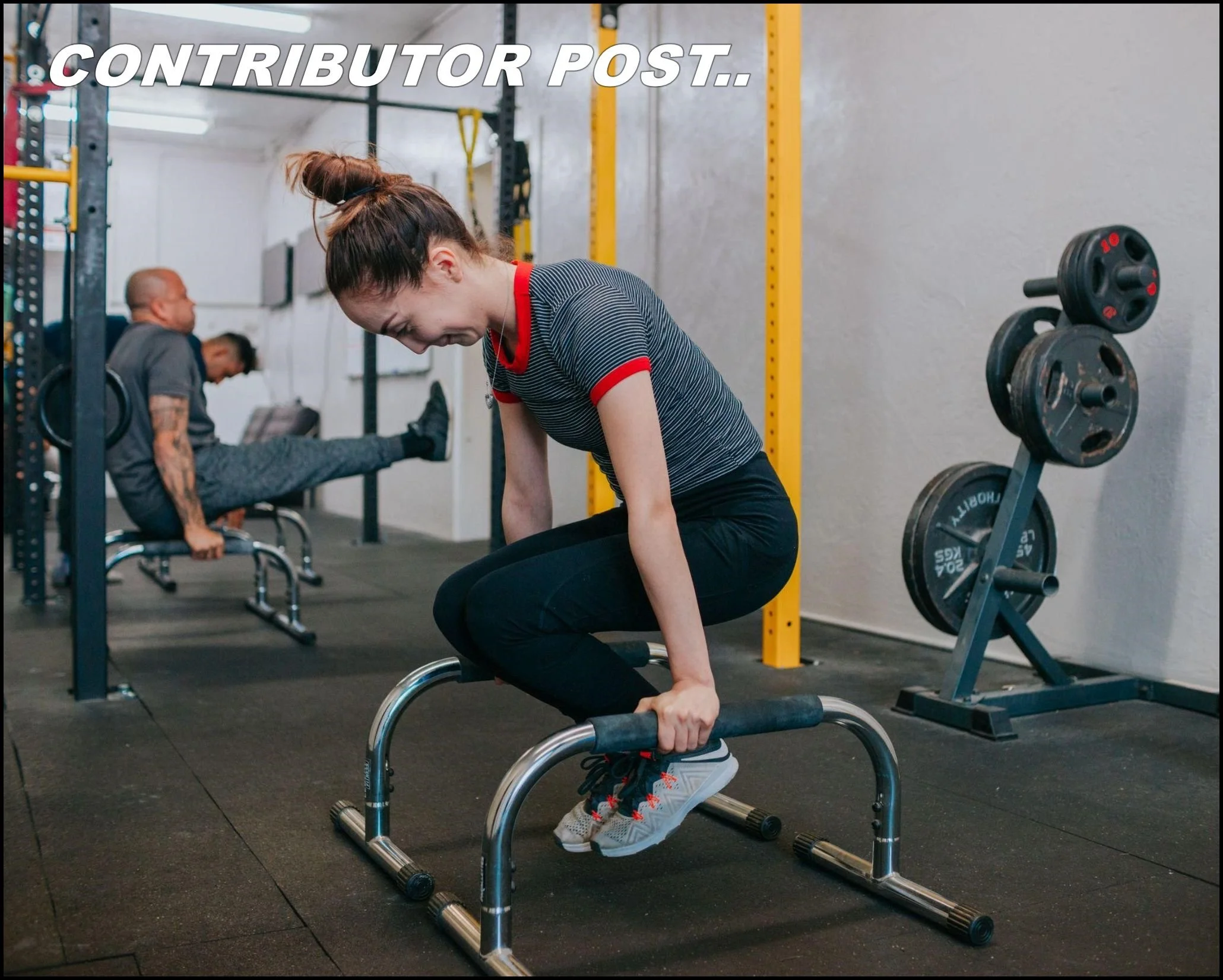
Fitness and Tough Times: Putting the Two Together

Today, we feature a guest post by Amy Collett of Bizwell.org …
PRACTICAL STRATEGIES TO REDUCE STRESS
Stress is a natural part of life — but when unmanaged, it can quietly erode your energy, focus, and long-term health. Whether you’re juggling work and family, navigating a career change, or just trying to keep up with daily demands, having a simple toolkit for stress relief can make all the difference. You don’t need a total lifestyle overhaul to feel better. Small, science-backed shifts can help you stay steady in the moments that matter.
Try Belly Breathing to Ground Yourself Fast
If your mind is racing, your breath probably is too. Shallow, fast breathing keeps your body in a stressful state. Belly breathing, also called diaphragmatic breathing, shifts you back into a relaxed mode by activating your parasympathetic nervous system. It’s simple: inhale through your nose, letting your belly rise, then exhale slowly through your mouth. Practicing this for just a few minutes a day can lower anxiety and help you feel more in control during tense situations. Learn how to do effective belly breathing relaxation.
Use Daily Habits to Build Long-Term Resilience
Your baseline stress level is shaped by your daily choices — not just big events. That means consistent sleep, regular movement, balanced meals, hydration, and moments of gratitude aren't just “nice to have” — they’re protective. These habits buffer your nervous system, making it easier to bounce back when life throws you a curveball. Daily healthy stress coping habits don’t need to be perfect — just consistent and kind.
Start Your Business, Reclaim Your Autonomy
For many people, job-related stress is constant — and often linked to misalignment between their values and their work. If you’ve felt stuck, bored, or undervalued, one bold but life-changing step is to become your own boss. Entrepreneurship isn’t a magic fix, but for those ready to regain control, it can transform anxiety into action. Platforms like ZenBusiness make it simple and approachable to start your own business — guiding you through the process with clarity and support. Building something of your own can create not just income, but renewed confidence and purpose.
Relax Your Body with Progressive Muscle Release
Stress often shows up as tight shoulders, clenched jaws, or stiff backs — even if you don’t notice it. Progressive Muscle Relaxation (PMR) helps by having you tense and release one muscle group at a time, guiding your body back to ease. Start at your toes and work your way up. It’s especially helpful before bed or after a long day of screen time. Here’s a progressive muscle relaxation step-by-step guide you can try in under 10 minutes.
Move Your Body — Even a Little
You don’t need a full gym routine to get the stress-reducing benefits of exercise. A brisk 10-minute walk, a few flights of stairs, or a short dance break can help your brain regulate cortisol and release feel-good endorphins. Movement gives your nervous system an outlet, especially after a tough day. If you’ve felt stuck in “fight or flight” mode, exercise to ease stress might be the fastest way out.
Use CBT-Based Tools to Reframe Your Reactions
Sometimes the most stressful part of a situation isn’t the situation itself — it’s the story we tell ourselves about it. Cognitive Behavioral Therapy (CBT) techniques help you identify unhelpful thought loops and replace them with more balanced perspectives. You don’t need a therapist to start: the UK’s NHS offers clear, free self‑help CBT strategies you can use anytime. These tools are powerful when dealing with uncertainty or self-doubt.
Breathe in 4-7-8 to Calm in 60 Seconds
This simple breathing pattern — inhale for 4 seconds, hold for 7, exhale for 8 — acts like a reset button for your body. It works by activating your relaxation response and slowing down your heart rate. Use it before a big meeting, after a tough conversation, or anytime you feel your anxiety creeping in. The 4‑7‑8 breathing method is easy to learn, and surprisingly powerful once it becomes a habit.
You don’t need to be naturally “chill” to feel calm. Managing stress is a learnable skill — one built through tools, practice, and small moments of intention. Start with what feels doable. Test one strategy this week, and notice how it shifts your day. With time, you’ll build a personalized system that works for your real life — not just your ideal one.
Join the Am I Next? community to gain insights and strategies for thriving in today’s unpredictable world and future-proofing your life and career!
About the author, Amy Collett…
Personal branding is you, exemplified.
After 18 years of climbing the corporate ladder, I was let go. As I was updating my resume, I realized something. Looking at the words on that paper, you couldn’t tell one single thing about who I really am.
A prospective employer wouldn’t know that, while I was leading a team of marketing professionals, I was also coaching my daughter’s soccer team to a championship.
My next boss wouldn’t be able to tell that, after a day at work training new employees, I go train to be a yoga instructor.
An HR manager wouldn’t be able to tell that I spend most of my vacation days each year traveling out of state to visit my aging grandmother.
None of them would know that, even though I had been responsible for keeping track of sample inventory at every job I’d ever had, I hated doing it.
But these are the things that make me who I am and, in a lot of cases, make me good at what I do. The leadership, discipline, and love I put into my personal life carry over into my work. They are not mutually exclusive.
That’s when I decided to merge the two. It wasn’t easy, but it was worth it. Now, I have a job where I can focus on my strengths, leave early on Tuesdays for soccer practice, and use personal days when I need to take care of my nana. More importantly, I am able to be my true self at work and at home. Talk about work/life balance!
The best part is, you can do it too.
Change is coming. There will always be a tomorrow, no matter how much you may try to ignore it. There are no guarantees in life, nor promises of a bright future. We see good people being laid off through no fault of their own. Just because something terrible hasn't happened yet doesn't mean it won't. It can happen to anyone, at any time, anywhere. No one is guaranteed to wake up tomorrow and still have a job by evening. While many employees can read the writing on the wall, why do most assume it’s targeted at someone else? Are you now wondering, Am I Next?