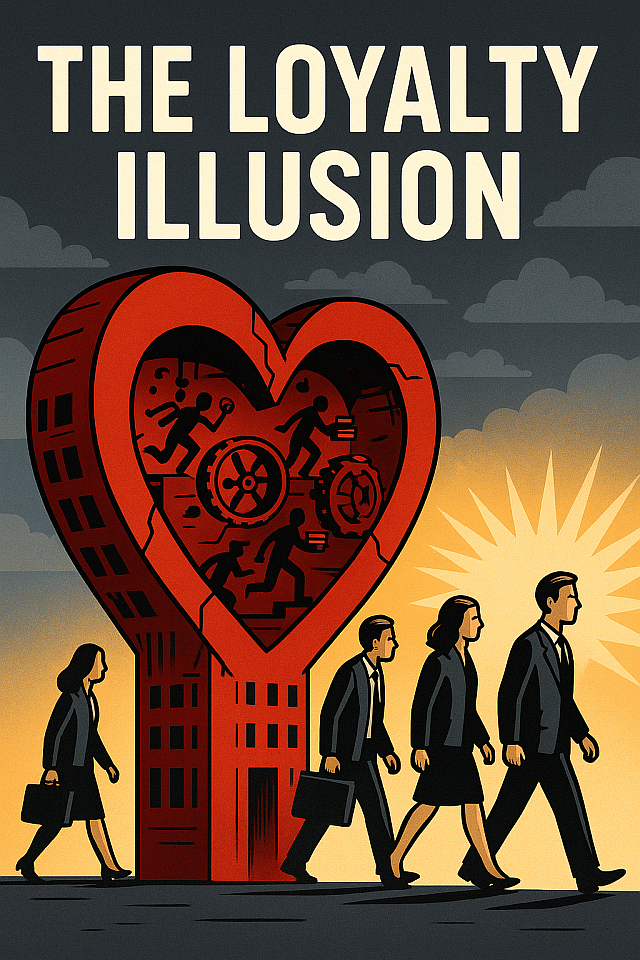
The Myth of Mutual Loyalty
Remember when companies bragged about being “family?” When HR posters plastered the walls with slogans about “our people are our greatest asset.” Forget it. That era is over. Companies don’t love employees. They never did. Loyalty is a one-way street now, paved with quarterly profits and bottom-line obsession. You bust your ass for years, absorb every unreasonable request, and what do you get in return? A pink slip when the numbers don’t add up. The sad truth: the love you pour into your job is not just unreciprocated, it’s irrelevant.
Companies Are Not People
Let’s get one thing straight: a corporation cannot feel. A spreadsheet can’t care about your sick kid, and a quarterly earnings report doesn’t notice the late nights you’ve worked. A board meeting cannot appreciate the stress you endure or the extra effort you put into client relationships. Employers are not your friends, mentors, or parents; they are legal and financial entities designed to extract value.
Every policy, every restructuring, every cutback is about numbers, not humans. The minute you start expecting gratitude, emotional support, or fairness, you’re setting yourself up for disappointment. Love, loyalty, and trust are human qualities. A company is a machine programmed to maximize revenue, and human sacrifice is simply collateral damage. Thinking that a corporation will “have your back” is a dangerous illusion; your loyalty is only useful as long as it serves the business.
Coworkers Will Move On—And You Should Too
Here’s a bitter pill: the people you work alongside won’t stay forever either. That office bestie who always covered for you? They’ll jump ship the second a better offer appears. Loyalty among coworkers is temporary, conditional, and often survival-based. The comforting illusion that “we’re in this together” evaporates when promotions, layoffs, or relocations come into play. Life moves on, and your coworkers move with it. Clinging to the idea of workplace loyalty is like trying to hold water in your hands; it slips away no matter how tight you grip.
The Brutal Reality of Corporate Love
If you’re still banking on loyalty, it’s time to wake up. Promotions are not rewards for dedication; they’re business calculations. Raises are not appreciation, they’re retention negotiations based on market value. And when the company restructures, downsizes, or outsources, don’t expect sympathy. Loyalty is transactional, not emotional. You give time and energy; they give a paycheck, and maybe a reference if you’re lucky. That’s the harsh reality of the modern workplace.
For True Liberation
If you want to survive—and even thrive—in a world where loyalty is dead, you need to reclaim control over your life. Here’s how:
Live below your means and carry little or no debt.
Spending less than you earn is the first step to freedom. Debt chains you to obligations and limits your ability to walk away from toxic jobs or companies. By keeping your lifestyle lean, you gain flexibility and control over your choices.
Build a liquid contingency fund.
Cash in the bank is tangible freedom. A contingency fund acts as a buffer against sudden layoffs, unexpected bills, or emergencies. Knowing you can survive several months without a paycheck allows you to make bold career moves without fear.
Develop multiple, independent sources of income.
Relying on a single employer is a trap. Side hustles, freelance work, investments, or passive income streams create independence. The more streams you have, the less any one company can hold you hostage. You stop begging for raises and start calling the shots in your own life.
Keep improving your marketable skills.
Your skills are your currency in a world that doesn’t value loyalty. Constantly upgrading them ensures that you remain valuable no matter how your company shifts. When layoffs hit, you won’t panic—you’ll pivot. When opportunities arise, you’ll be ready.
Don’t be screwed by a system dictated by others.
At the end of the day, nobody will fight for your freedom except you. Companies and coworkers will move on, but if you control your finances, skills, and options, you reclaim the leverage they never intended for you to have. True liberation is not about loyalty—it’s about preparation, independence, and self-respect.
Bottom Line: Stop Waiting for a Miracle
Here’s the final truth: employers cannot reciprocate love, coworkers will move on, and corporate loyalty is a fairy tale for naïve dreamers. The sooner you accept it, the sooner you reclaim your energy, focus, and sanity. Work hard, yes—but work smart, for yourself, not for a company that doesn’t know your name. The era of mutual loyalty is dead. The era of realistic, self-centered career survival is here.
Change is coming. There will always be a tomorrow, no matter how much you may try to ignore it. There are no guarantees in life, nor promises of a bright future. We see good people being laid off through no fault of their own. Just because something terrible hasn't happened yet doesn't mean it won't. It can happen to anyone, at any time, anywhere. No one is guaranteed to wake up tomorrow and still have a job by evening. While many employees can read the writing on the wall, why do most assume it’s targeted at someone else? Are you now wondering, Am I Next?