
Career Advice: Think a Decade Ahead (Even When the System Doesn’t)
Good career advice has always had a long-term horizon. The choices that matter most—what to study, which skills to build, where to specialize—rarely pay off in months. They pay off over years, sometimes decades. Looking 10 or more years ahead isn’t optional anymore; it’s the only way to make sense of a labor market that changes faster than any syllabus or job description.
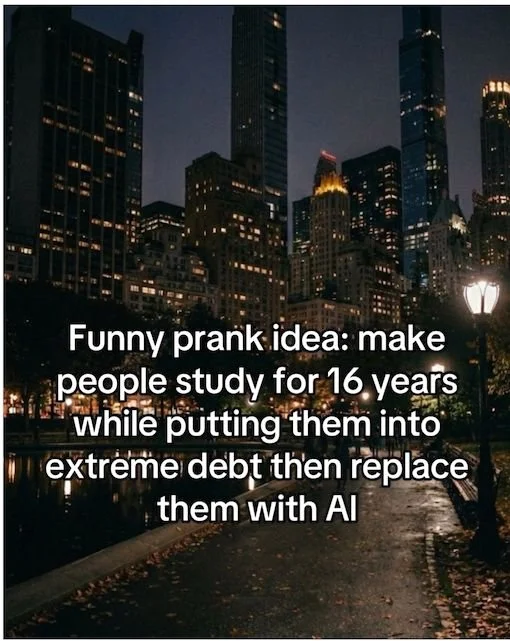
The cruel joke is that the system tells you to do the opposite. It asks you to spend 16 or more years in formal education, accumulate extreme debt, and specialize deeply—often in ways optimized for yesterday’s economy. By the time you graduate, entire categories of work can be automated, outsourced, or quietly replaced by an expert system powered by artificial intelligence. You are told you’re “prepared,” only to discover the map no longer matches the terrain.
This is why thinking far ahead matters. Instead of asking, What job do I want right after graduation? ask, What kinds of problems will still need humans in 10–20 years? Look for skills that compound over time: judgment, systems thinking, creativity, leadership, domain insight, and the ability to learn faster than your peers. Tools change; meta-skills endure.
Planning long-term doesn’t mean predicting the future perfectly. It means building optionality. Choose paths that let you pivot when technology shifts. Avoid identities that collapse if a single task is automated. Invest in learning how technologies work, not just how to use today’s version of them.
The irony is that artificial intelligence doesn’t make long-term thinking less important—it makes it essential. When machines can do more of the “expert” work, human advantage shifts to synthesis, direction, and meaning. Careers that survive aren’t those protected by credentials alone, but those anchored in adaptability and purpose.
Look 10 years ahead, not because the system encourages it, but because it doesn’t. In a world that can replace skills quickly, the only durable strategy is to become someone who can outgrow replacement.
Change is constant, and it's coming. There will always be a tomorrow, no matter how much you may try to ignore it. There are no guarantees in life, nor promises of a bright future. We see good people being laid off through no fault of their own. Just because something terrible hasn't happened yet doesn't mean it won't. It can happen to anyone, at any time, anywhere. No one is guaranteed to wake up tomorrow and still have a job by evening. While many employees can read the writing on the wall, why do most assume it’s targeted at someone else? Are you now wondering, Am I Next?