
A Radical Move That Has Silicon Valley Talking
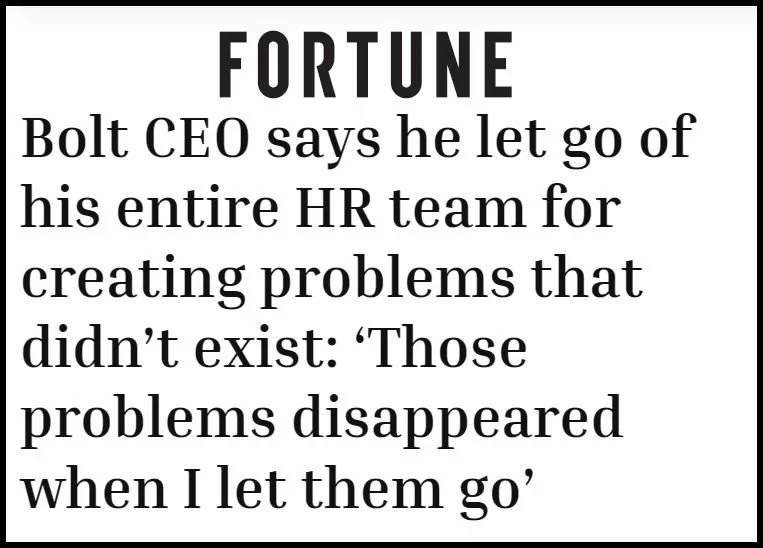
Most CEOs would hesitate before eliminating an entire department, especially one responsible for hiring, compliance, and employee relations. But Bolt CEO Ryan Breslow is taking a very different approach.
Speaking at a workforce conference, Breslow revealed that he eliminated Bolt’s HR department because he believed it was creating unnecessary obstacles rather than helping the company move forward. According to Breslow, many of the issues the team focused on vanished once the department was gone.
The statement immediately sparked debate about the role of HR in modern companies and whether some organizations have become too bureaucratic to operate efficiently.
From Startup Darling To Survival Mode
Bolt’s journey has been anything but smooth. The fintech company once reached a reported valuation of roughly $11 billion during the startup boom. However, changing market conditions, declining growth, and operational challenges eventually sent the company into a steep decline.
After stepping away from leadership, Breslow returned to the CEO position, determined to rebuild the company from the ground up. He described the environment as a "wartime" situation rather than a period of growth and stability.
That mindset led to sweeping cost-cutting measures, multiple rounds of layoffs, and a complete reevaluation of how the company operates.
Why Breslow Says Most Employees Had To Go
Beyond eliminating HR, Breslow argued that Bolt had developed a culture where many employees became too comfortable during the company’s high-growth years.
According to him, workers had grown accustomed to abundant resources, large budgets, and management structures that no longer fit the company's financial reality. When he returned, he gave employees a limited period to adapt to a leaner startup culture.
The result was dramatic. Breslow said most employees and much of the leadership team were ultimately replaced as Bolt shifted toward a smaller, more performance-focused workforce.
The End Of Startup Perks
The turnaround effort also meant abandoning several employee-friendly policies that had previously helped define the company’s culture.
Four-day workweeks, unlimited paid time off, and other flexible arrangements were scaled back as management prioritized productivity and execution. Breslow argued that rebuilding the company required a return to a more demanding, hands-on environment.
His message was clear: survival and growth now take priority over workplace perks.
A Smaller Team, Bigger Results?
Today, Bolt reportedly operates with around 100 employees—far fewer than during its peak years. Breslow claims the leaner workforce is more motivated, responsive, and focused on serving customers.
He argues that a smaller group of highly engaged workers can outperform a much larger organization burdened by bureaucracy and internal friction. Whether that model proves sustainable remains to be seen, but it has undoubtedly attracted attention across the business world.
Bottom Line
Ryan Breslow’s decision to eliminate Bolt’s HR department and dramatically reduce headcount represents one of the most aggressive corporate restructuring stories in recent memory. Supporters see it as a bold return to startup discipline and accountability, while critics view it as an extreme rejection of traditional workplace management. Either way, Bolt’s experiment is becoming a closely watched test of whether lean teams and relentless execution can succeed where larger organizations struggle.
Change is constant, and it's coming. There will always be a tomorrow, no matter how much you may try to ignore it. There are no guarantees in life, nor promises of a bright future. We see good people being laid off through no fault of their own. Just because something terrible hasn't happened yet doesn't mean it won't. It can happen to anyone, at any time, anywhere. No one is guaranteed to wake up tomorrow and still have a job by evening. While many employees can read the writing on the wall, why do most assume it’s targeted at someone else? Are you now wondering, Am I Next?