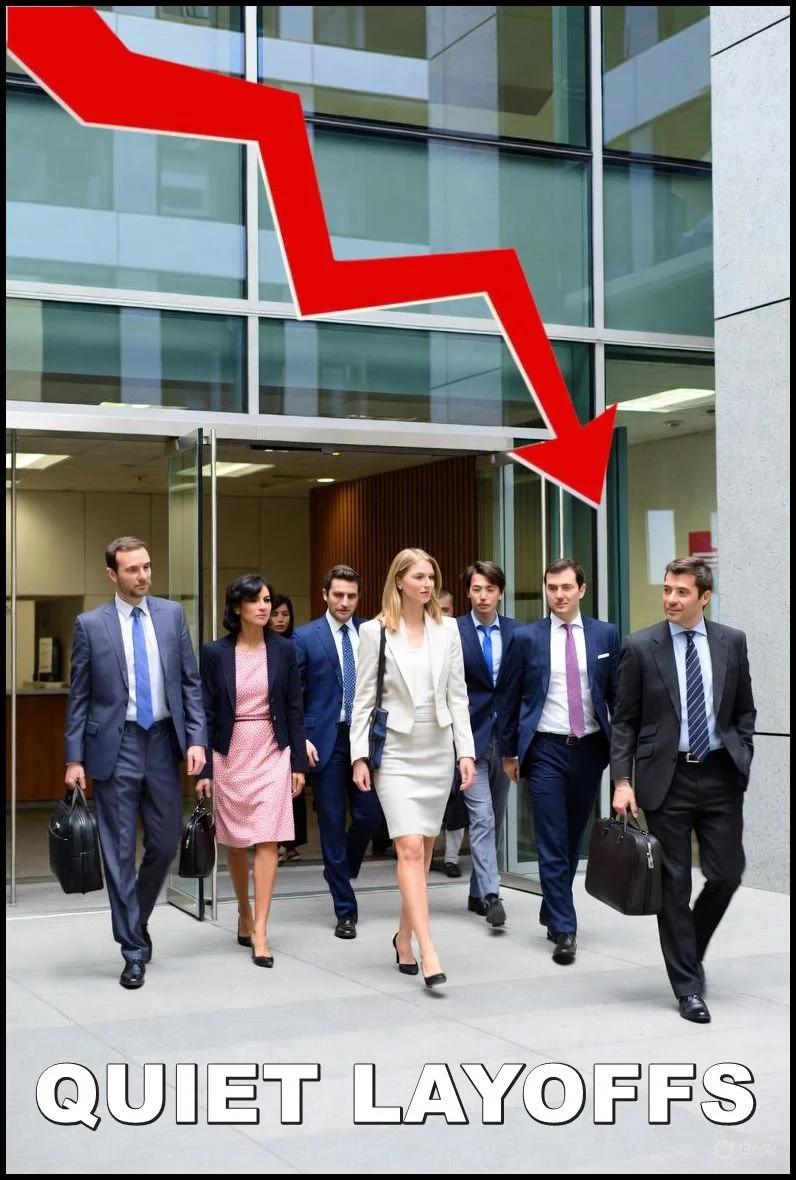
AM I NEXT? HAVE YOU BEEN THE SUBJECT OF A CRUEL JOB JOKE?

Career Advice: Think a Decade Ahead (Even When the System Doesn’t)

Good career advice has always had a long-term horizon. The choices that matter most—what to study, which skills to build, where to specialize—rarely pay off in months. They pay off over years, sometimes decades. Looking 10 or more years ahead isn’t optional anymore; it’s the only way to make sense of a labor market that changes faster than any syllabus or job description.

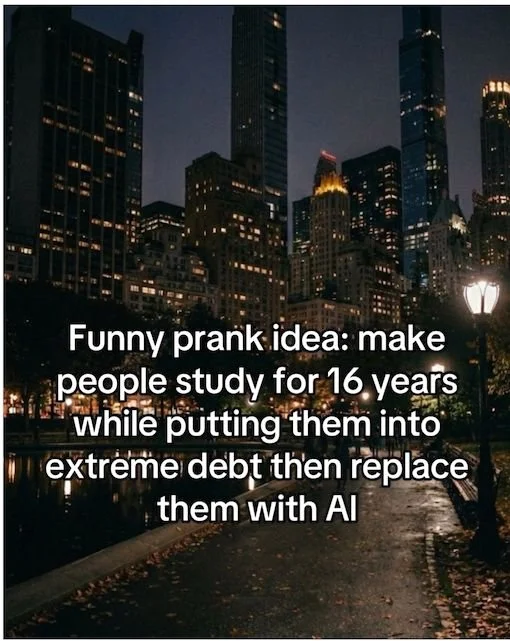
The cruel joke is that the system tells you to do the opposite. It asks you to spend 16 or more years in formal education, accumulate extreme debt, and specialize deeply—often in ways optimized for yesterday’s economy. By the time you graduate, entire categories of work can be automated, outsourced, or quietly replaced by an expert system powered by artificial intelligence. You are told you’re “prepared,” only to discover the map no longer matches the terrain.

This is why thinking far ahead matters. Instead of asking, What job do I want right after graduation? ask, What kinds of problems will still need humans in 10–20 years? Look for skills that compound over time: judgment, systems thinking, creativity, leadership, domain insight, and the ability to learn faster than your peers. Tools change; meta-skills endure.

Planning long-term doesn’t mean predicting the future perfectly. It means building optionality. Choose paths that let you pivot when technology shifts. Avoid identities that collapse if a single task is automated. Invest in learning how technologies work, not just how to use today’s version of them.

The irony is that artificial intelligence doesn’t make long-term thinking less important—it makes it essential. When machines can do more of the “expert” work, human advantage shifts to synthesis, direction, and meaning. Careers that survive aren’t those protected by credentials alone, but those anchored in adaptability and purpose.

Look 10 years ahead, not because the system encourages it, but because it doesn’t. In a world that can replace skills quickly, the only durable strategy is to become someone who can outgrow replacement.

Change is constant, and it's coming. There will always be a tomorrow, no matter how much you may try to ignore it. There are no guarantees in life, nor promises of a bright future. We see good people being laid off through no fault of their own. Just because something terrible hasn't happened yet doesn't mean it won't. It can happen to anyone, at any time, anywhere. No one is guaranteed to wake up tomorrow and still have a job by evening. While many employees can read the writing on the wall, why do most assume it’s targeted at someone else? Are you now wondering, Am I Next?

AM I NEXT? "FOREVER LAYOFFS"

“Forever layoffs” refers to a growing pattern in which companies make repeated, small reductions to their workforce instead of announcing a single, sweeping round of cuts. These downsizings often involve fewer than 50 employees at a time, allowing them to happen quietly, without the public scrutiny or regulatory attention that typically accompanies large layoffs. Because the cuts occur in a steady drip rather than one decisive moment, employees are left in a constant state of unease, unsure when the next wave might arrive.

For employers, this approach offers agility. It allows leadership to adjust staffing levels in response to shifting markets, tighter budgets, or the implementation of automation and AI tools. Instead of reorganizing all at once, companies can recalibrate teams gradually, reducing the immediate shock to operations and public perception.

For workers, however, the ongoing uncertainty can feel more damaging than a single, clearly defined event. The workplace takes on a “slow-bleed” quality: morale declines, trust erodes, and employees may struggle to focus or plan for the future when job security feels perpetually in question. Over time, this environment can prompt voluntary turnover as people choose to leave before they become part of the next quiet round of cuts.

Change is constant, and it's coming. There will always be a tomorrow, no matter how much you may try to ignore it. There are no guarantees in life, nor promises of a bright future. We see good people being laid off through no fault of their own. Just because something terrible hasn't happened yet doesn't mean it won't. It can happen to anyone, at any time, anywhere. No one is guaranteed to wake up tomorrow and still have a job by evening. While many employees can read the writing on the wall, why do most assume it’s targeted at someone else? Are you now wondering, Am I Next?

NAVIGATING LIFE’S TURNING POINTS: HOW TO THRIVE, NOT JUST SURVIVE

Today, we feature a guest post by Amy Collett of Bizwell.org 

Navigating Life’s Turning Points: How to Thrive, Not Just Survive

Major life transitions — whether you’re changing jobs, ending a relationship, or moving across the world — can feel like free-fall. Yet within that uncertainty lies your chance for renewal. The key isn’t to endure change, but to evolve through it.

Quick Insight

Change strips away the familiar, forcing us to rebuild. Those who thrive don’t cling to the old map — they redraw it. Resilience, reflection, and routine become the compass points.

1. Understanding Transition as a Growth Stage

A transition is not a single event; it’s a process. According to this guide on emotional adaptation, individuals move through phases — letting go, neutral zone, and new beginning. Each stage challenges your sense of identity but also opens creative potential.

A job loss, for instance, can feel destabilizing, yet it’s often the precursor to deeper self-understanding and better alignment between work and purpose. The question isn’t “How do I get back to normal?” but rather, “What might my new normal look like?”

2. The Stability Scaffold: What to Hold Onto When Everything Shifts

Here’s a practical list — a framework to rely on when the world feels unstable.

  • Sleep and structure. Keep consistent wake times and meals. It anchors your body’s rhythm.
  • Movement. Even short walks reduce cortisol and boost clarity.
  • Reflection. Journal or record voice notes to track emotional patterns.
  • Connection. Schedule regular contact with supportive people — friends, mentors, or coaches.
  • Boundaries. Guard your time and energy. Overcommitting during transitions fuels burnout.

The essence: regulate the small things so you can handle the big things.

3. Career Pivots & Rebuilding Professional Identity

If your transition involves a career shakeup — say you’ve lost your job or are starting over — focus on clarity before action. Define what you want to do next rather than just what you’ve done before.

When rewriting your resume, highlight adaptability, problem-solving, and initiative. Keep formatting clean, emphasize results, and tailor content for each role. Once complete, always save and send your resume as a PDF to maintain layout consistency. Tools like this simple online tool to convert a PDF can make that step effortless.

Remember: a career setback often seeds your most aligned opportunity.

4. Realignment Practices

Action Why It Matters How to Begin
Reflect on values Clarifies what’s truly important Write down 5 life priorities
Audit daily habits Reveals energy leaks Use a 7-day tracker
Practice gratitude Reframes mindset from loss to possibility Note 3 things each morning
Build micro-goals Prevents overwhelm Focus on tasks under 30 minutes
Reconnect socially Enhances perspective and support Rejoin a group or volunteer network

4. Learning in Motion — Upskilling During Change

For those seeking a reinvention or promotion, education can bridge the gap between “what was” and “what’s next.”

Earning an online degree allows flexibility while you rebuild your confidence and credentials. For instance, pursuing a business degree online can strengthen skills in communication, management, and accounting — all highly transferable across industries. To explore options that fit your schedule and ambitions, click here.

Lifelong learning isn’t about chasing certificates — it’s about anchoring yourself in curiosity during chaos.

5. Emotional Intelligence: The Silent Catalyst

During any major shift, emotions amplify — fear, nostalgia, excitement, and confusion collide. Recognizing, naming, and managing them becomes vital. Research shows that people who regulate emotions constructively adapt faster to change.

A few approaches:

  • Label it. Say, “I’m feeling uncertain,” instead of “I’m failing.” Naming gives shape to chaos.
  • Observe, don’t judge. Treat emotions as weather — temporary, informative, not permanent.
  • Redirect energy. Channel anxiety into movement, planning, or creative outlets like writing or painting.

6. Managing Transition Stress

Stress Type Symptom Grounding Strategy
Uncertainty fatigue Overthinking Set 15-min “decision windows”
Loss of control Physical tension Use breathwork (4-7-8 method)
Isolation Withdrawal Schedule one social action daily
Identity confusion Self-doubt Journal small wins every night

7. A Mindset of Experimentation

Treat this season as a laboratory. Instead of asking “What if I fail?”, try “What will I learn?”

Those who treat disruption as experimentation experience greater satisfaction over time. Tiny shifts (testing new routines, environments, or skills) compound into reinvention.

8. The Productive Pause: Replenishing Between Chapters

Thriving through change also means resting through it. Too many people sprint to the next milestone without integrating what they’ve learned. Try a short digital detox or mindfulness retreat. Resources like Mindful.org’s beginner guide or Headspace’s techniques can help calm mental noise and make room for reflection.

FAQ: Common Questions About Navigating Transitions

How long does it take to feel “normal” again?

Studies suggest adjustment periods range from 6 months to 2 years depending on life domain and support systems.

What’s the biggest mistake people make during change?

Avoiding discomfort. Suppressing it delays growth. Leaning into it accelerates adaptation.

How can I tell if I’m actually thriving?

You’ll notice more curiosity than fear, more forward motion than regret. Thriving isn’t a finish line — it’s a steady return to engagement.


Final Thought

Life transitions don’t erase who you were — they reveal who you can become. The uncertainty you feel now is not evidence of failure; it’s proof of transformation underway. Build small anchors, invest in learning, express your story — and you’ll emerge not just intact, but expanded.

About the author, Amy Collett

Personal branding is you, exemplified.

 After 18 years of climbing the corporate ladder, I was let go. As I was updating my resume, I realized something. Looking at the words on that paper, you couldn’t tell one single thing about who I really am.

  • A prospective employer wouldn’t know that, while I was leading a team of marketing professionals, I was also coaching my daughter’s soccer team to a championship.

  • My next boss wouldn’t be able to tell that, after a day at work training new employees, I go train to be a yoga instructor.

  • An HR manager wouldn’t be able to tell that I spend most of my vacation days each year traveling out of state to visit my aging grandmother.

  • None of them would know that, even though I had been responsible for keeping track of sample inventory at every job I’d ever had, I hated doing it.

 But these are the things that make me who I am and, in a lot of cases, make me good at what I do. The leadership, discipline, and love I put into my personal life carry over into my work. They are not mutually exclusive.

That’s when I decided to merge the two. It wasn’t easy, but it was worth it. Now, I have a job where I can focus on my strengths, leave early on Tuesdays for soccer practice, and use personal days when I need to take care of my nana. More importantly, I am able to be my true self at work and at home. Talk about work/life balance!

The best part is, you can do it too.

Contact Amy


Change is coming. There will always be a tomorrow, no matter how much you may try to ignore it. There are no guarantees in life or promises for a bright future. Just because something bad hasn't happened yet, doesn't mean it won't. It can happen to anyone, anytime, anywhere. No one is guaranteed to wake up tomorrow and still have a job by evening. Are you now wondering, Am I Next?