
AM I NEXT? NO LOVE AT PACKAGING CORPORATION OF AMERICA

Lake Forest, Illinois-based Packaging Corporation of America, a manufacturer of packaging material and containers, has announced a restructuring that will result in the permanent shutdown of its No. 2 paper machine and kraft pulping facilities at the Wallula, Washington mill.

The shutdown will impact 200 employees with layoffs commencing on February 9, 2026.

According to Chairman and CEO Mark Kowlzan, “We recognize the impact of decisions like this on our employees and will provide support through this process. We greatly appreciate their efforts and our decision is not a reflection on their performance. We are taking these steps to support the future viability of the mill and improve our efficiency and cost position, while continuing to invest in our future growth."

"We face a challenging and worsening cost environment at the Wallula mill. Wood fiber and purchased power costs are by far the highest in our system, making the currently configured mill no longer competitive. By operating as a single-machine, recycled mill, we will streamline operations at the facility and significantly lower our cost of production, while continuing to produce high-quality containerboard for our plants and customers. We have significantly invested in the W3 machine and its capabilities after we converted it to containerboard in 2018. Moving some production to lower-cost PCA facilities where we are investing in production improvements will further optimize our mill system, resulting in even greater efficiencies.”

Change is constant, and it's coming. There will always be a tomorrow, no matter how much you may try to ignore it. There are no guarantees in life, nor promises of a bright future. We see good people being laid off through no fault of their own. Just because something terrible hasn't happened yet doesn't mean it won't. It can happen to anyone, at any time, anywhere. No one is guaranteed to wake up tomorrow and still have a job by evening. While many employees can read the writing on the wall, why do most assume it’s targeted at someone else? Are you now wondering, Am I Next?
AM I NEXT? HAVE YOU BEEN THE SUBJECT OF A CRUEL JOB JOKE?

Career Advice: Think a Decade Ahead (Even When the System Doesn’t)

Good career advice has always had a long-term horizon. The choices that matter most—what to study, which skills to build, where to specialize—rarely pay off in months. They pay off over years, sometimes decades. Looking 10 or more years ahead isn’t optional anymore; it’s the only way to make sense of a labor market that changes faster than any syllabus or job description.

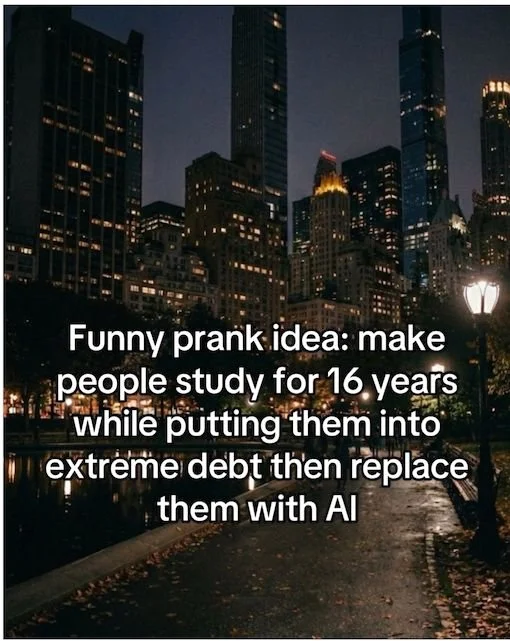
The cruel joke is that the system tells you to do the opposite. It asks you to spend 16 or more years in formal education, accumulate extreme debt, and specialize deeply—often in ways optimized for yesterday’s economy. By the time you graduate, entire categories of work can be automated, outsourced, or quietly replaced by an expert system powered by artificial intelligence. You are told you’re “prepared,” only to discover the map no longer matches the terrain.

This is why thinking far ahead matters. Instead of asking, What job do I want right after graduation? ask, What kinds of problems will still need humans in 10–20 years? Look for skills that compound over time: judgment, systems thinking, creativity, leadership, domain insight, and the ability to learn faster than your peers. Tools change; meta-skills endure.

Planning long-term doesn’t mean predicting the future perfectly. It means building optionality. Choose paths that let you pivot when technology shifts. Avoid identities that collapse if a single task is automated. Invest in learning how technologies work, not just how to use today’s version of them.

The irony is that artificial intelligence doesn’t make long-term thinking less important—it makes it essential. When machines can do more of the “expert” work, human advantage shifts to synthesis, direction, and meaning. Careers that survive aren’t those protected by credentials alone, but those anchored in adaptability and purpose.

Look 10 years ahead, not because the system encourages it, but because it doesn’t. In a world that can replace skills quickly, the only durable strategy is to become someone who can outgrow replacement.

Change is constant, and it's coming. There will always be a tomorrow, no matter how much you may try to ignore it. There are no guarantees in life, nor promises of a bright future. We see good people being laid off through no fault of their own. Just because something terrible hasn't happened yet doesn't mean it won't. It can happen to anyone, at any time, anywhere. No one is guaranteed to wake up tomorrow and still have a job by evening. While many employees can read the writing on the wall, why do most assume it’s targeted at someone else? Are you now wondering, Am I Next?

AM I NEXT? "FOREVER LAYOFFS"

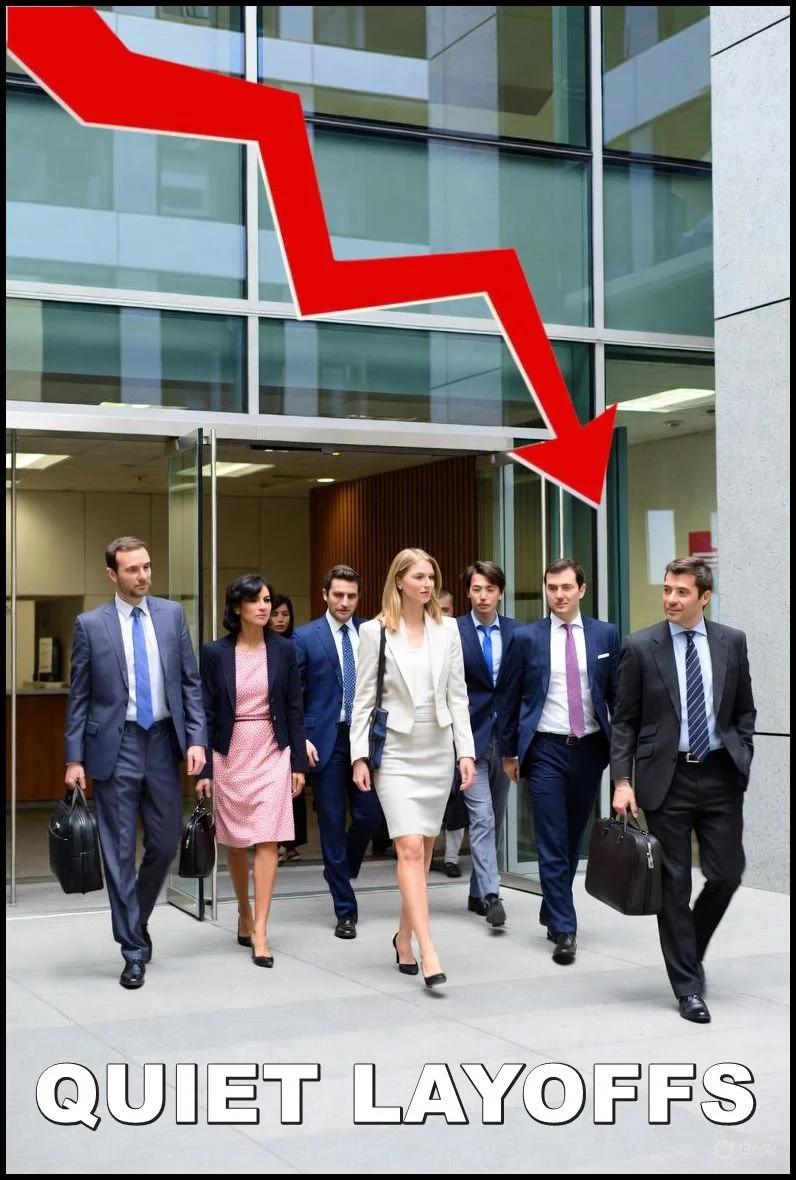
“Forever layoffs” refers to a growing pattern in which companies make repeated, small reductions to their workforce instead of announcing a single, sweeping round of cuts. These downsizings often involve fewer than 50 employees at a time, allowing them to happen quietly, without the public scrutiny or regulatory attention that typically accompanies large layoffs. Because the cuts occur in a steady drip rather than one decisive moment, employees are left in a constant state of unease, unsure when the next wave might arrive.

For employers, this approach offers agility. It allows leadership to adjust staffing levels in response to shifting markets, tighter budgets, or the implementation of automation and AI tools. Instead of reorganizing all at once, companies can recalibrate teams gradually, reducing the immediate shock to operations and public perception.

For workers, however, the ongoing uncertainty can feel more damaging than a single, clearly defined event. The workplace takes on a “slow-bleed” quality: morale declines, trust erodes, and employees may struggle to focus or plan for the future when job security feels perpetually in question. Over time, this environment can prompt voluntary turnover as people choose to leave before they become part of the next quiet round of cuts.

Change is constant, and it's coming. There will always be a tomorrow, no matter how much you may try to ignore it. There are no guarantees in life, nor promises of a bright future. We see good people being laid off through no fault of their own. Just because something terrible hasn't happened yet doesn't mean it won't. It can happen to anyone, at any time, anywhere. No one is guaranteed to wake up tomorrow and still have a job by evening. While many employees can read the writing on the wall, why do most assume it’s targeted at someone else? Are you now wondering, Am I Next?